Credit cards are useful financial tools, but many people feel confused when they hear words like interest rate, APR, or finance charges. One of the biggest reasons people fall into credit card debt is not understanding how credit card interest rates really work.
In this guide, we will explain credit card interest rates in the simplest possible way. Even a school student can understand it. This article is written to help beginners, working professionals, and anyone who wants to use credit cards smartly and safely in 2026 and beyond.
What Is a Credit Card Interest Rate?
A credit card interest rate is the extra money a bank charges you when you do not pay your full bill on time.
In simple words:
-
If you pay your full credit card bill → No interest
-
If you pay only part of the bill → Interest is charged
This interest is how banks make money from credit cards.
High-search keywords used:
credit card interest rate, credit card interest meaning, credit card APR
What Does APR Mean in Credit Cards?
APR stands for Annual Percentage Rate.
What is APR in simple terms?
APR shows how much interest you pay in one year if you keep a balance on your credit card.
Example:
-
APR = 24%
-
This does NOT mean 24% is charged monthly
-
It is calculated yearly but applied daily or monthly
Keyword: what is APR, APR meaning credit card
Is Credit Card Interest Charged Monthly or Daily?
Most credit cards use daily interest calculation.
How daily interest works:
-
Bank divides APR by 365 days
-
Interest is calculated every day
-
Total interest is added to your bill
This is why carrying a balance even for a few days can increase your bill.
When Do Credit Cards Charge Interest?
Interest is charged when:
-
You do not pay full outstanding balance
-
You withdraw cash using credit card
-
You miss the payment due date
Interest is NOT charged when:
-
You pay full bill before due date
-
You only use interest-free period
What Is the Interest-Free Period?
The interest-free period is the time when banks do not charge interest.
Usually:
-
20 to 55 days
-
Depends on billing cycle and due date
If you pay your full bill within this time, interest = zero.
Keyword: interest free period credit card
How Credit Card Interest Is Calculated (Simple Example)
Let’s understand with an easy example.
-
Credit card APR: 24%
-
Daily interest rate: 24 ÷ 365 ≈ 0.065%
-
Outstanding amount: $1,000
Daily interest:
$1,000 × 0.065% = $0.65 per day
If unpaid for 30 days:
$0.65 × 30 = $19.50 interest
This is how interest slowly increases.
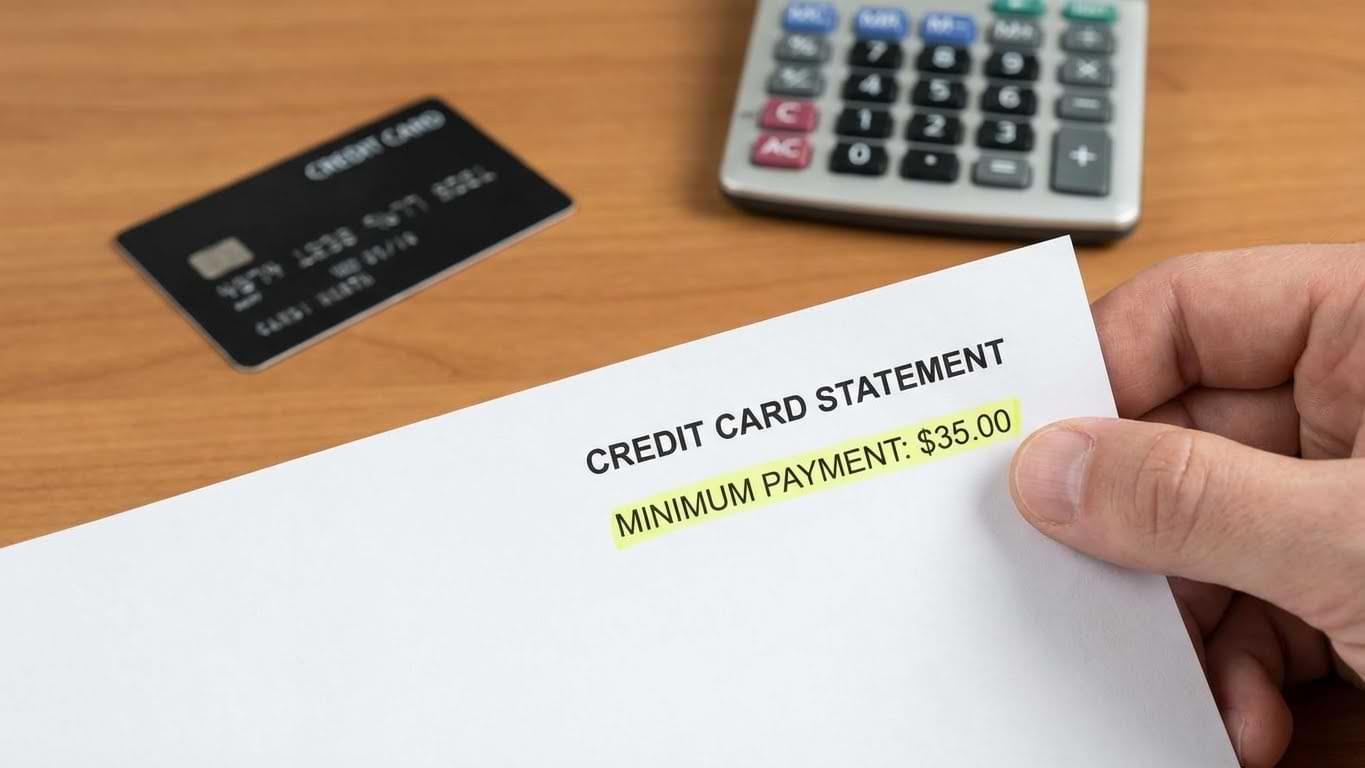
What Is Minimum Due and Why Is It Dangerous?
Minimum due is the smallest amount you must pay to avoid late fees.
Why minimum due is risky:
-
Interest continues on remaining balance
-
Debt keeps increasing
-
Takes years to clear balance
Paying minimum due is one of the most common credit card mistakes.
Keyword: minimum due credit card
What Is Revolving Credit?
Credit cards are called revolving credit because:
-
You can reuse credit after repayment
-
Balance keeps revolving monthly
But revolving credit with unpaid balance means interest keeps adding.
What Is Credit Card Compound Interest?
Credit card interest is often compound interest.
This means:
-
Interest is charged on principal
-
Interest is also charged on previous interest
This is why credit card debt grows fast.
Keyword: compound interest credit card
Why Are Credit Card Interest Rates So High?
Credit cards are unsecured loans. Banks do not take collateral.
So banks charge high interest because:
-
Higher risk
-
Instant credit
-
Flexible repayment
Credit card interest rates are higher than:
-
Personal loans
-
Home loans
-
Auto loans
What Is a Good Credit Card Interest Rate?
Interest rates vary by country and card type.
Generally:
-
12%–18% → Low
-
18%–24% → Average
-
24%+ → High
Beginners should always choose lower APR cards.
Does Everyone Get the Same Interest Rate?
No.
Your interest rate depends on:
-
Credit score
-
Income
-
Payment history
-
Card type
People with high credit score get lower interest rates.
Keyword: credit score and interest rate
How Credit Score Affects Credit Card Interest?
Credit score shows how responsible you are with money.
High credit score:
-
Lower interest rate
-
Higher credit limit
Low credit score:
-
Higher interest rate
-
More fees
Improving credit score reduces interest cost.
What Is Cash Advance Interest Rate?
Cash withdrawal using credit card is called cash advance.
Important facts:
-
Higher interest rate
-
No interest-free period
-
Extra cash withdrawal fees
Cash advances are the most expensive credit card feature.
Keyword: credit card cash advance interest
How Balance Transfer Interest Works?
Balance transfer means moving debt from one card to another.
Some cards offer:
-
0% interest for limited time
-
Lower APR
But after the offer period, normal interest applies.
How Late Payment Affects Interest Rate?
Late payments can:
-
Increase interest rate
-
Add late fees
-
Damage credit score
Some banks apply penalty APR after late payments.
What Is Penalty APR?
Penalty APR is a very high interest rate charged when:
-
Payments are missed
-
Terms are violated
Penalty APR can be 30% or more.
How to Avoid Paying Credit Card Interest?
Best practices:
-
Pay full balance every month
-
Avoid cash advances
-
Track spending
-
Use reminders
Smart usage = zero interest.
Should You Choose Low Interest or Rewards Card?
For beginners:
-
Low interest card is better
-
Rewards are secondary
Rewards lose value if interest is high.
Fixed vs Variable Interest Rate – What’s Better?
Fixed interest rate:
-
More predictable
-
Less affected by market changes
Variable interest rate:
-
Can increase or decrease
-
Depends on economy
Beginners should prefer fixed or stable APR.
Can You Negotiate Credit Card Interest Rate?
Yes, sometimes.
You can:
-
Call customer care
-
Request rate reduction
-
Show good payment history
Banks may reduce interest for loyal users.
How Credit Card Interest Impacts Long-Term Finances?
High interest can:
-
Increase debt
-
Delay savings
-
Affect mental health
Understanding interest helps you stay debt-free.
Is Credit Card Interest Always Bad?
No.
Interest is bad only when:
-
Balance is unpaid
-
Spending is uncontrolled
Used wisely, credit cards can cost zero interest.
How Banks Want You to Think About Interest?
Banks often promote:
-
Minimum due
-
Easy EMIs
But real profit comes from interest charges.
Smart users understand the system.
How to Read Credit Card Statement for Interest?
Your statement shows:
-
Outstanding balance
-
Interest charged
-
APR
-
Due date
Always review statement carefully.
What Is EMI Conversion and Interest?
Some banks allow EMI on purchases.
EMI pros:
-
Fixed monthly payment
-
Predictable
EMI cons:
-
Hidden interest
-
Processing fees
Always calculate total cost.
Are Zero-Interest Credit Cards Real?
Some cards offer:
-
0% APR for limited time
But:
-
Conditions apply
-
Interest starts after period ends
Read terms carefully.
Future of Credit Card Interest Rates in 2026
In 2026:
-
AI-based risk pricing
-
Personalized APR
-
Better transparency
But basic rules remain the same.
Final Thoughts: Understanding Credit Card Interest Is Power
Credit card interest is not confusing once you understand:
-
When it applies
-
How it is calculated
-
How to avoid it
A smart credit card user:
-
Pays full balance
-
Tracks spending
-
Uses credit wisely
Knowledge is the best protection against debt.
Frequently Asked Questions (FAQs)
Q1. Do I pay interest if I pay full credit card bill?
No, full payment avoids interest.
Q2. What is the safest way to use credit cards?
Pay full balance before due date.
Q3. Is credit card interest charged daily?
Yes, most cards calculate daily interest.
Q4. Can interest rate change over time?
Yes, based on terms and credit behavior.
Q5. Is minimum due payment enough?
No, it leads to long-term debt.
📌 Google AdSense & ADX Policy Note
This article is purely educational and informational.
It does not promote misleading financial claims or risky behavior.
All content follows Google AdSense and Google AdX policies, ensuring safe ad placement and user trust.